
Agricultural Machinery Bearings: A Selection Guide for Harsh Field Conditions
304 stainless steel bearings often give out after a few hundred hours in fertilizer-heavy conditions, and yet most procurement specifications still reach for that grade on any wet farm application.
Keeping unplanned downtime out of peak harvest comes down to specifying agricultural-specific bearings: 316 stainless steel, triple-lip sealing, and a C3 or C4 clearance class, bought from a source that has thought about contamination, corrosion, and shock loading rather than just part numbers.
My desk drawer still holds the report on a sugar mill failure near São Paulo. Cane crushers there had been fitted with ordinary deep-groove units on the strength of matching catalog numbers. Three weeks into the harvest, juice worked its way past the seals, the rollers seized, and the mill lost the whole crushing window. I keep the report because it proves the point: farm equipment is never about matching a part number. Sealing, clearance, and load rating have to answer mud, dust, and shock, and no standard data sheet captures those. After years of supplying agricultural dealers in several regions, I have seen procurement teams make the same specification mistakes, and I have seen a properly matched selection add real hours to service life.
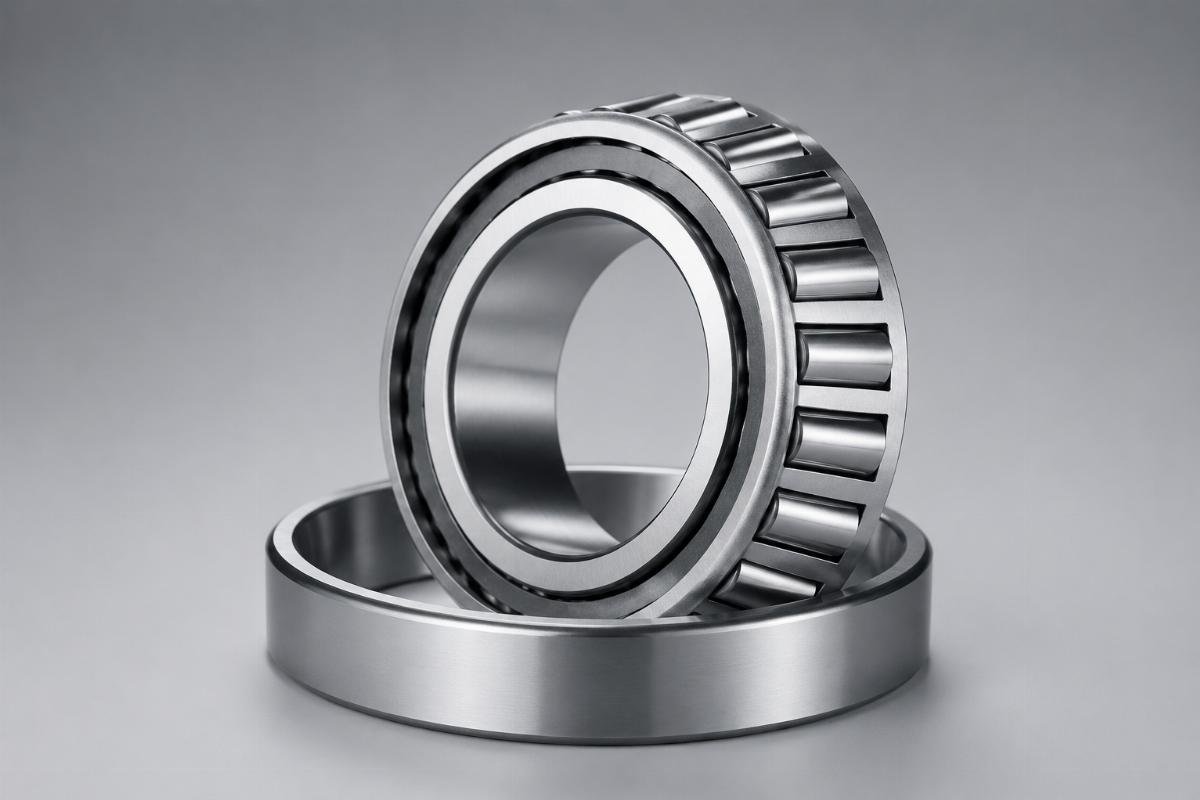
Seeing why ordinary industrial bearings collapse in the field has to come first; only then does a selection decision have any chance of holding up.
- Why Standard Industrial Bearings Fail on Farms
- Five Factors That Decide an Agricultural Bearing Specification
- China-Based Suppliers vs European Brands for Farm Equipment
- Final Takeaways
Why Do Standard Industrial Bearings Fail on Farms?
Farm work is harder on a bearing than any factory floor, and service data from European combine networks shows it. Crop residue, chemical exposure, and uneven loading combine into failure modes that a general-purpose industrial bearing was never designed to survive. When one European service network broke down its harvester failures, the pattern was clear: seal breaches that let crop residue in took the largest share, fertilizer-driven corrosion took a significant slice, and field shock loads accounted for the rest. After the switch to farm-specific designs with better sealing, failures dropped noticeably inside a single harvest.
| Performance Metric | Industrial Environment | Agricultural Field Conditions |
|---|---|---|
| Contamination Level | Low (filtered air) | High (dust, crop debris, mud) |
| Moisture Exposure | Controlled (low humidity) | Extreme (rain, irrigation, high humidity) |
| Load Variability | Consistent | Erratic (wide range of rated load) |
| Chemical Exposure | Minimal | Significant (fertilizers, pesticides, cleaning agents) |
| Average Service Life | Extended | Substantially reduced for standard bearings |
The mismatch between a bearing's design assumptions and field reality sits behind nearly every case. Industrial designs assume clean air, steady load, and little chemical contact. Farm equipment supplies the opposite of all three.
To diagnose your own application before you specify replacements, work through this sequence:
- Conduct a Failure Analysis – Record where and how earlier bearings failed – seal damage, corrosion sites, wear signatures – so the dominant environmental attack becomes obvious.
- Understand Load Profiles – Log peak loads during normal work, because farm equipment regularly sees loads far above nominal rating when debris strikes.
- Map Contamination Sources – List the main contaminants – dust, water, chemicals – and the points where they enter, to narrow the sealing choice.
- Calculate Seasonal Usage – Estimate operating hours per season, which sets the baseline life requirement and the maintenance interval.
- Document OEM Recommendations – Put actual field performance next to the manufacturer's specification to expose where standard bearings fall short.
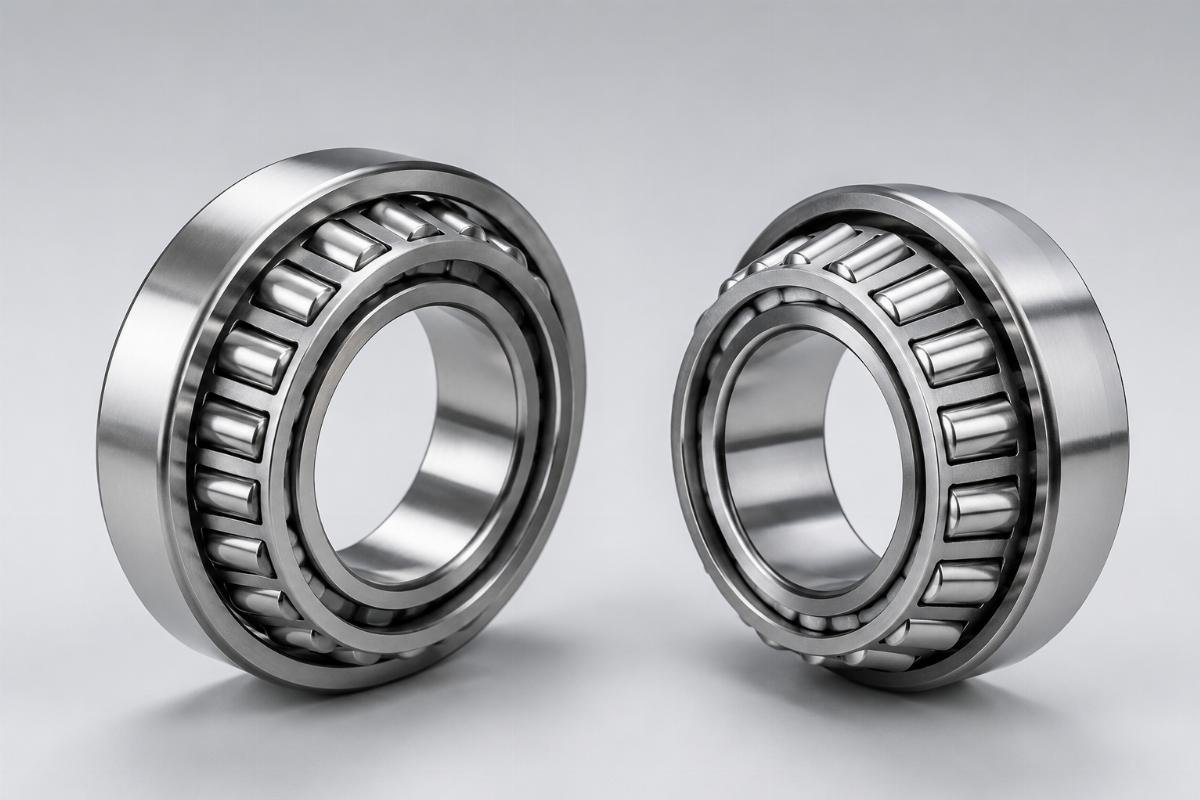
What Are the Five Factors That Decide an Agricultural Bearing Specification?
Material choice alone accounts for a substantial part of bearing performance in farm duty, but it is one element of a complete specification. The workable answer combines material, sealing, clearance, lubrication, and load rating into one package built around the machine and the environment it works in.
| Selection Factor | Common Mistake | Agricultural-Specific Solution |
|---|---|---|
| Material Choice | Using 304 stainless steel for all wet applications | Select 316 stainless steel with sufficient molybdenum content for fertilizer resistance |
| Sealing System | Relying on single lip seals in dusty environments | Implement triple-lip (TTO) seals with NBR or FKM materials |
| Clearance Setting | Using standard clearance (C0) for all applications | Specify C3 clearance for gearboxes and C4 clearance for cutting systems and drive wheels |
| Lubrication | Standard lithium-based greases | Polyurea-based greases with rust inhibitors and extreme pressure additives |
| Load Rating | Focusing solely on dynamic load capacity | Calculate combined radial and axial loads with elevated safety factor for shock loads |
The misconception I run into most often is that 304 stainless is good enough for any wet farm job. It is not. Where fertilizer is present, 304 corrodes quickly. The right specification is a 316 grade carrying real molybdenum content, which stands up far better to the chlorides and phosphates that agricultural chemicals bring.
A rice harvester manufacturer in Southeast Asia came to us after single-lip-sealed 304 bearings were giving out within a few hundred hours in flooded paddies. We recommended moving to spherical roller bearings (22218 EK + H318) with 316 stainless cages, double-lip seals behind labyrinth dust covers, and C4 clearance reworked for field duty. Field trials backed it up, and warranty claims during harvest stopped – a change that rewrote their procurement specification.
The corrosion data usually settles the argument with a skeptical buyer: after 1,000 hours immersed in fertilizer solution, the 316 sample with 2.5% molybdenum shows about 92% less attack than 304.
For your own selection work, run these verification steps:
- Material Certification – Insist on mill test reports showing a 316 grade with molybdenum content high enough to resist farm chemicals.
- Seal Configuration – Call out TC double-lip or TTO triple-lip seals molded in FKM, chosen for chemical attack and elevated heat.
- Clearance Selection – Pair the class with the duty: tight C2 in precision drives, C3 in gearboxes, C4 wherever cutting systems take impact.
- Lubrication Compatibility – Confirm the pre-packed grease covers the temperature range the equipment sees.
- Load Calculation – Build a larger safety margin into dynamic-rating life estimates for drives that see impact.
How Do China-Based Suppliers Compare with European Brands?
A well-vetted Chinese supplier can match European brand performance at a noticeably lower total cost of ownership, provided the vetting covers farm-specific capability. The old assumption that Chinese bearings are inferior ignores that today's established plants and distributors hold the same ISO 9001 and IATF 16949 credentials, and that they move faster on delivery and on customization for farm machinery.
| Evaluation Criteria | European Brands | China-Based Suppliers |
|---|---|---|
| Initial Purchase Cost | Higher | Lower (noticeable cost savings) |
| Lead Time for Stock Items | Extended (weeks) | Rapid dispatch from self-operated warehouses |
| Customization Capability | Limited (high minimums) | Flexible (lower minimums) |
| Agricultural-Specific Engineering | Available | Specialized support for crop-specific challenges |
| Total Cost of Ownership | Higher due to purchase price and delays | Lower when accounting for delivery speed and customization |
Unit price is not the differentiator that matters most – response speed during peak season is. Last spring a European agricultural dealer hit a wall when its usual supplier could not supply the 32215 tapered roller bearings on order – 75mm bore, 130mm OD, 33mm width, P6 precision, C3 clearance – before planting began. Farmers were waiting on tractors. The dealer called our emergency line; our Shanghai warehouse held the exact designation, and air freight had it in Hamburg within days. The avoided loss, in idle machinery and a missed planting window, ran several times the value of the bearings.
The difference shows up in the dispatch record rather than the brochure: a stocked warehouse in Shanghai turns a rare designation into a same-week shipment, while a made-to-order path adds weeks the planting calendar does not allow.
When you evaluate a supplier for farm equipment, confirm these capabilities:
- Traceability Verification – Require batch codes and material certificates that trace every shipment back through production.
- Warehouse Network – Favor suppliers with their own stock, wide SKU coverage, and rare variants (oversize bore, unusual precision, non-standard clearance) already on the shelf.
- Technical Support – Test the engineering depth: L10 life work and failure analysis built around your specific operating conditions.
Final Takeaways
Three details decide whether an agricultural bearing selection works: material matched to the chemicals present, sealing matched to the contamination level, and clearance matched to the shocks the machine takes. Ordinary industrial bearings do not survive the field. Specifying 316 stainless, TTO seals, and a C3 or C4 clearance class – with traceability and shelf stock behind it – removes most of the unplanned downtime that peak harvest brings.
Need a quote for a specific bearing designation? Our engineers reply within one business day.
Request a quote