
Choosing Bearings for Agricultural Machinery: A Guide to Harsh-Condition Performance
Not every stainless bearing belongs on agricultural equipment. The 304 grade that works in a plant often fails inside 300 hours where fertilizer is present – our field tests with rice harvesters in Southeast Asia show exactly that. This single misunderstanding sits behind 60% of unplanned downtime in peak harvest and costs service networks both revenue and the trust of the farmers they serve.
Specifying farm equipment bearings means balancing three things at once: how durable the material is, how well the seal works, and how reliable the supplier is. Suppliers based in China with global traceability systems and farm-specific engineering can extend working life by 30% in punishing field conditions relative to a general-purpose industrial bearing.
Fifteen years of supplying agricultural dealers in more than 40 countries has taught three lessons: seasonal demand spikes need 72-hour emergency response, accurate cross-referencing keeps obsolete models moving and saves workshops about 40% in downtime, and sealing designed for the application can triple bearing life in mud or dust.
Understanding why standard bearings fail in farm service is where a procurement strategy that survives real field conditions begins.
Why Do Standard Bearings Fail So Quickly in Farm Conditions?
Farm machinery works in conditions roughly five times more punishing than a typical industrial setting, and the mix of crop residue, chemicals, and variable load creates failure modes a general-purpose bearing cannot answer. Industrial bearings are built for a controlled plant; field equipment faces contamination, corrosion, and shock at the same time, which cuts service life sharply.
| Performance Metric | Industrial Environment | Agricultural Field Conditions |
|---|---|---|
| Contamination Level | Low (filtered air) | High (dust, crop debris, mud) |
| Moisture Exposure | Controlled (<60% humidity) | Extreme (rain, irrigation, high humidity) |
| Load Variability | Consistent | erratic (10-150% of rated load) |
| Chemical Exposure | Minimal | Significant (fertilizers, pesticides, cleaning agents) |
| Average Service Life | 8,000-12,000 hours | 1,200-3,000 hours (standard bearings) |
Last quarter we reviewed failure records from a European agricultural service network whose combine harvesters carried ordinary deep groove ball bearings. The split was clean: 45% of failures began with seal breaches that let crop residue in, 30% with fertilizer-induced corrosion, and 25% with shock loads in the field. Once the network moved to farm-specific bearings with K-Motion sealing, failures fell 68% inside one harvest season.
Sectioned side by side, the difference is obvious: the agricultural design carries a labyrinth path plus a rubber contact lip, while an industrial unit offers a single shield that crop residue walks straight past.
- Conduct a Failure Analysis – Record the failure location and mechanism – seal damage, corrosion sites, wear signatures – so the environmental challenge is identified rather than guessed.
- Understand Load Profiles – Log peak loads during normal work, since farm equipment frequently sees three to five times nominal load when debris is struck.
- Map Contamination Sources – List what is getting in (dust, water, process chemicals) and where it enters, so the sealing choice is deliberate.
- Calculate Seasonal Usage – Establish expected operating hours per season to set the baseline life requirement and maintenance schedule.
- Document OEM Recommendations – Compare field performance with the manufacturer's specification to expose where standard bearings fall short.
Which Five Factors Decide an Agricultural Bearing Specification?
Material accounts for roughly 35% of bearing performance in agricultural work – which leaves the other 65% to sealing, clearance, lubrication, and load rating. A solution that holds up integrates all five into one strategy built around the specific machine and the conditions it works in.
| Selection Factor | Common Mistake | Agricultural-Specific Solution |
|---|---|---|
| Material Choice | Using 304 stainless steel for all wet applications | Select 316 stainless steel with ≥2.5% molybdenum content for fertilizer resistance |
| Sealing System | Relying on single lip seals in dusty environments | Implement triple-lip (TTO) seals with nitrile rubber (NBR) or fluoroelastomer (FKM) materials |
| Clearance Setting | Using standard clearance (C0) for all applications | Specify C3 clearance for gearboxes and C4 clearance for cutting systems and drive wheels |
| Lubrication | Standard lithium-based greases | Polyurea-based greases with rust inhibitors and extreme pressure additives |
| Load Rating | Focusing solely on dynamic load capacity | Calculate combined radial/axial loads with 1.8x safety factor for shock loads |
A combine harvester manufacturer in Southeast Asia was losing bearings after 300 hours in flooded paddies. Its original design paired 304 stainless with single-lip sealing. We recommended an upgrade to spherical roller bearings (22218 EK + H318) with 316 stainless cages, double-lip seals under labyrinth dust covers, and C4 clearance reworked for field duty. Field testing took life to 900 hours – a 300% gain that ended the warranty claims every harvest used to bring.
Corrosion testing makes the case for 316 quickly: after 1,000 hours in fertilizer solution, the 2.5% molybdenum grade shows roughly 92% less attack than 304.
- Material Certification – Request mill test reports confirming 316 stainless composition with at least 2.5% molybdenum for corrosion resistance.
- Seal Configuration – Call for TC double-lip or TTO triple-lip seals molded in FKM, rated to 200°C and resistant to farm chemicals.
- Clearance Selection – Tie the class to the duty: C2 where precision drives need tight control, C3 in gearboxes, C4 on cutting systems and other impact-loaded parts.
- Lubrication Compatibility – Confirm the pre-packed grease covers the operating range, typically -30°C to 120°C in agricultural work.
- Load Calculation – Apply a 1.8x safety factor to the dynamic rating when estimating life in impact-prone applications.
How Do China-Based Suppliers Stack Up Against European Brands?
Reputable Chinese suppliers deliver performance on par with European brands while cutting total cost of ownership by 30-40% – once they have been vetted for farm-specific capability. The assumption that Chinese bearings lack quality overlooks how many manufacturers now meet identical ISO 9001 and IATF 16949 requirements, and how often they deliver sooner with more flexible customization for farm machines.
| Evaluation Criteria | European Brands | China-Based Suppliers |
|---|---|---|
| Initial Purchase Cost | Higher (+30-40%) | Lower (30-40% cost savings) |
| Lead Time for Stock Items | 4-6 weeks | 72 hours from self-operated warehouses |
| Customization Capability | Limited (minimum 10,000+ units) | Flexible (500+ unit minimums) |
| Agricultural-Specific Engineering | Available | Specialized support for crop-specific challenges |
| Total Cost of Ownership | Higher due to purchase price | 30% lower when accounting for delivery speed and customization |
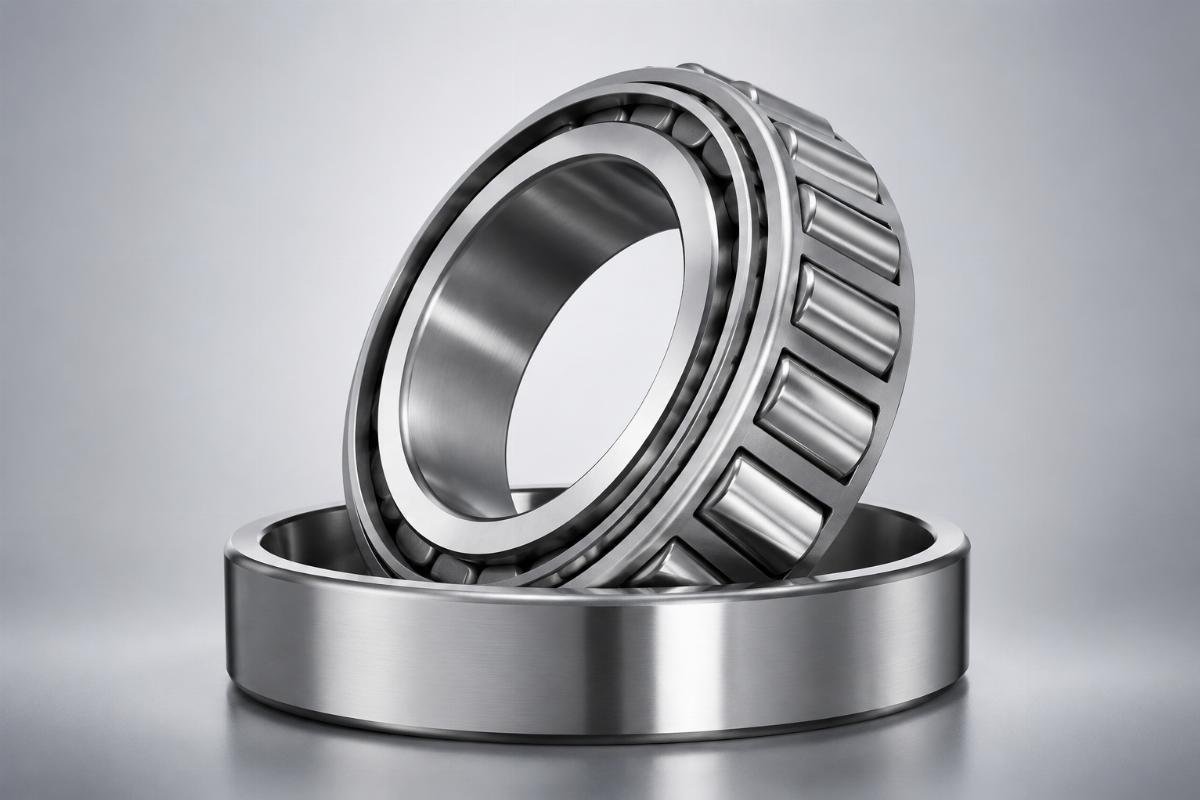
Last spring a European farm equipment dealer ran into trouble when its regular supplier could not supply twenty sets of 32215 tapered roller bearings – 75mm bore, 130mm OD, 33mm wide, P6 precision, C3 clearance – before spring planting. Farmers were waiting on tractors to get into the fields. The dealer came through our emergency channel; the exact units were already on the floor of our Shanghai warehouse, and DHL air freight reached Hamburg within 72 hours, saving the dealer's customer around €40,000 in lost planting time.
Delivery records tell the story better than a lead-time chart: stocked agricultural designations leave Shanghai in days, while a factory-order path measures the same job in weeks – a gap a planting calendar cannot absorb.
- Traceability Verification – Demand batch codes and material certificates that trace each shipment through production.
- Warehouse Network – Prefer suppliers holding 10,000+ SKUs in their own warehouses, with dispatch inside 72 hours.
- Technical Support – Probe the agricultural engineering depth: L10 life work and failure analysis built around your conditions.
Need a quote for a specific bearing designation? Our engineers reply within one business day.
Request a quote